Grid Watch — Live F1 Standings, Telemetry & Strategy
by Cyrus Lee
Grid Watch is three pages, each answering a different question a fan asks over a race weekend. Nothing is hard-coded: every page fetches fresh data when it loads, from the Jolpica (Ergast-compatible) API for results and standings, and from OpenF1 for car telemetry.
Standings is the at-a-glance view — the next round with a live countdown and session times, the podium and full result from last time out, and both championships alongside the season calendar.
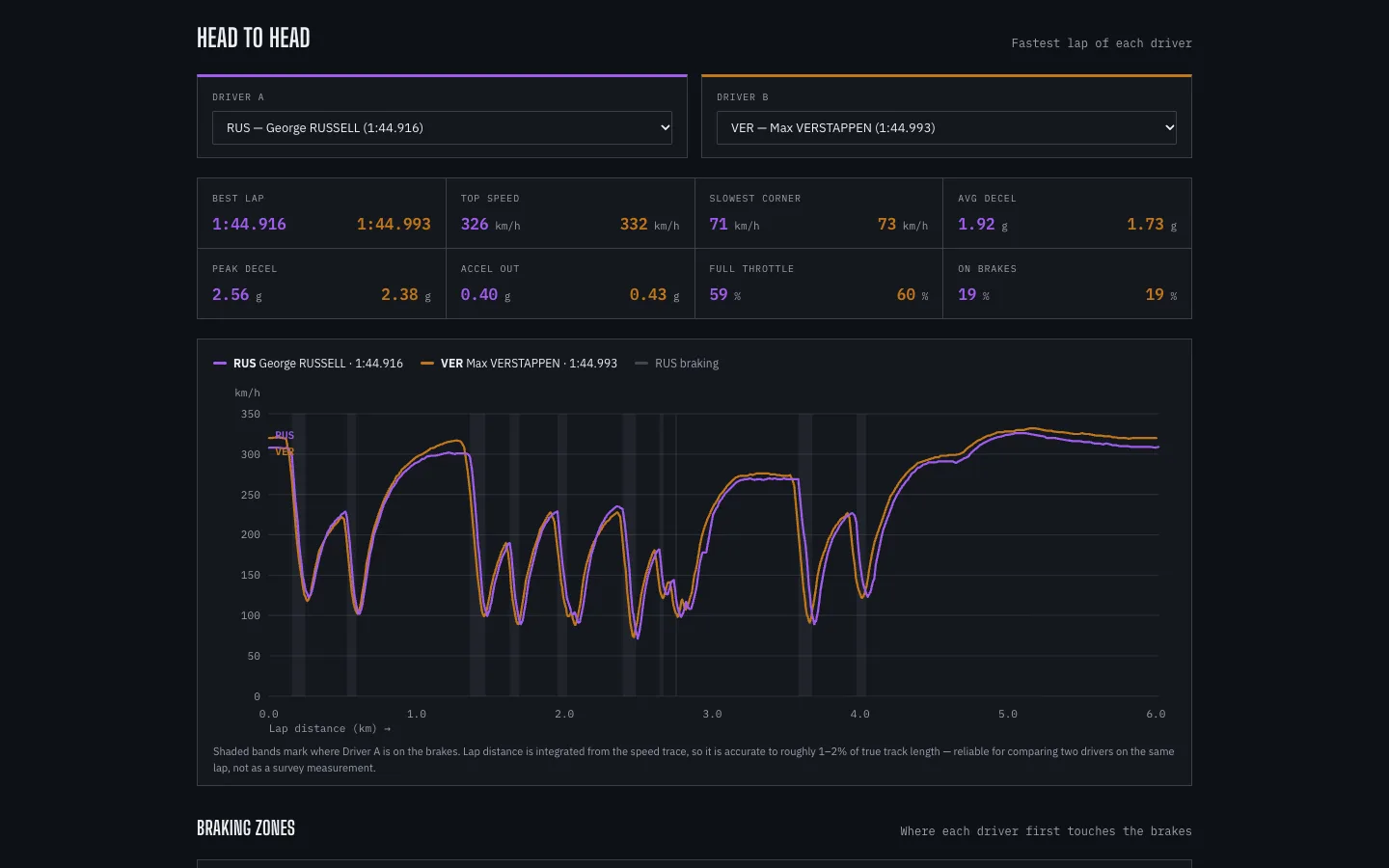
Telemetry ranks the whole field for any session by best lap, sector times and speed trap, re-sortable by any column. Pick two drivers and it overlays their fastest laps as speed traces against lap distance, then breaks the lap into braking zones: where each driver first touches the brakes, entry and apex speed, and average deceleration in g. The data is sampled at only about 3.7 Hz, so lap distance is integrated from the speed trace and deceleration is averaged across each zone rather than read from single noisy samples — and the page says so, stating that distance is accurate to roughly 1–2%.
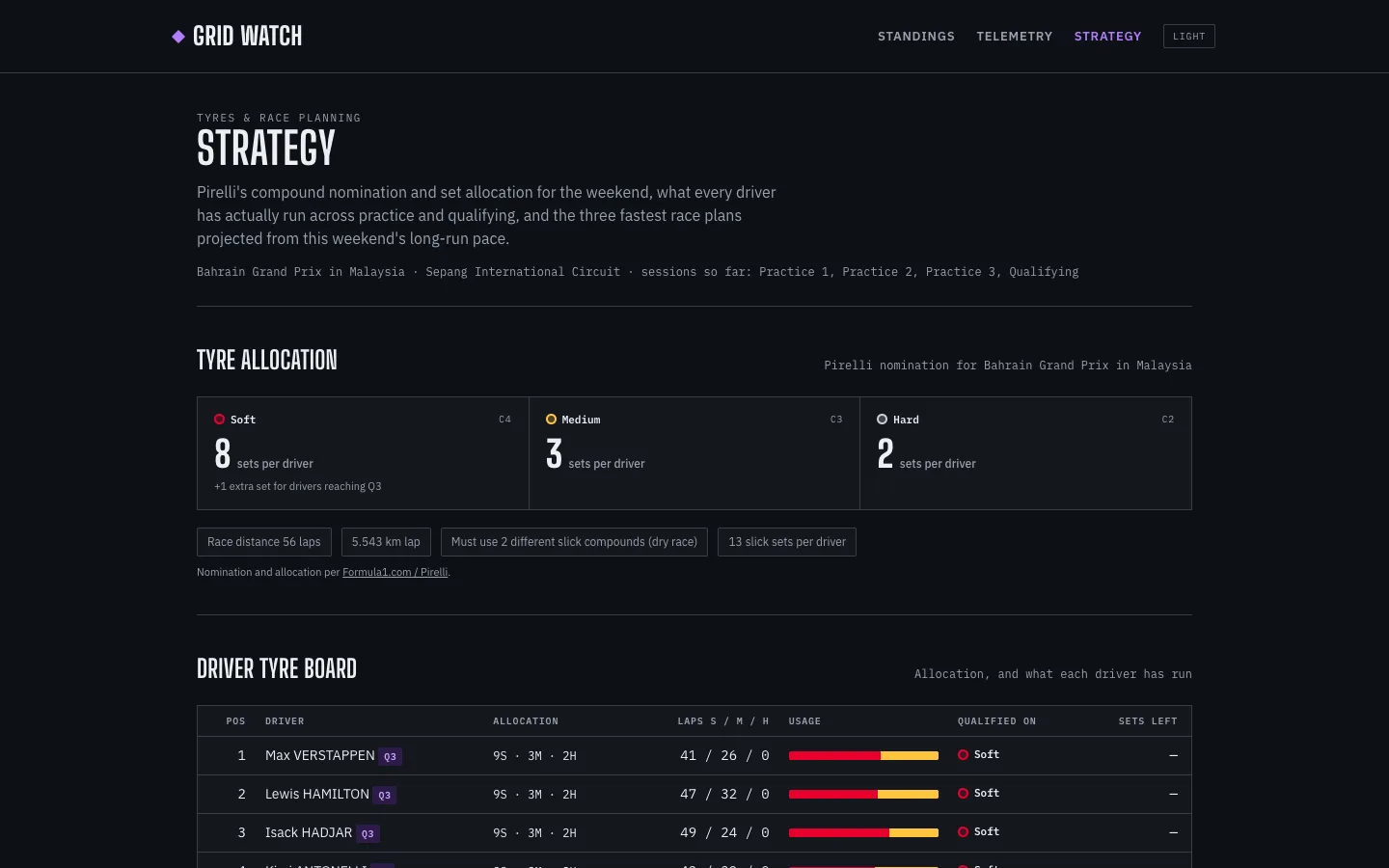
Strategy shows Pirelli's compound nomination and set allocation for the weekend, what every driver has actually run, and the three fastest race plans. Pace and degradation for each compound are fitted from practice long runs, with traffic laps dropped and a sanity check that a softer tyre must be faster and wear quicker than a harder one; when fuel load breaks that ordering, the compound is estimated instead and labelled as such.
What stands out is how carefully it handles data it can't trust. OpenF1 reports a zero tyre age on 78% of stints, which would make it look as though nearly the whole field had exceeded its legal tyre allocation — so rather than show a wrong number, the sets-remaining column stays blank until the official Pirelli figures are entered by hand.
More like this
What's for Dinner — Quick Pick & Nutrition Coach
by Alvin Ng
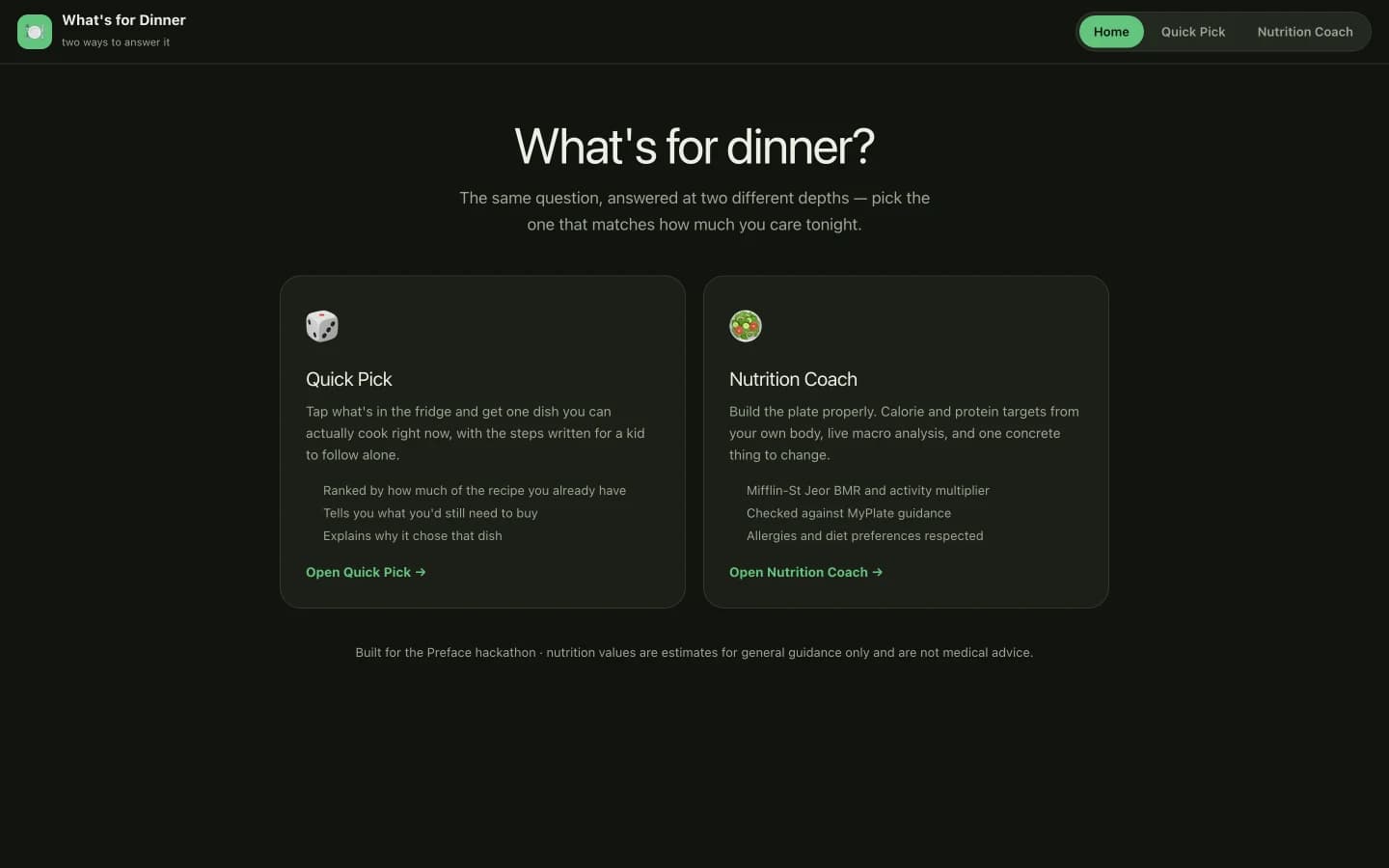
One question answered at two depths: tap what's in the fridge for a dish you can cook right now, or build the plate properly against calorie and protein targets calculated from your own body.
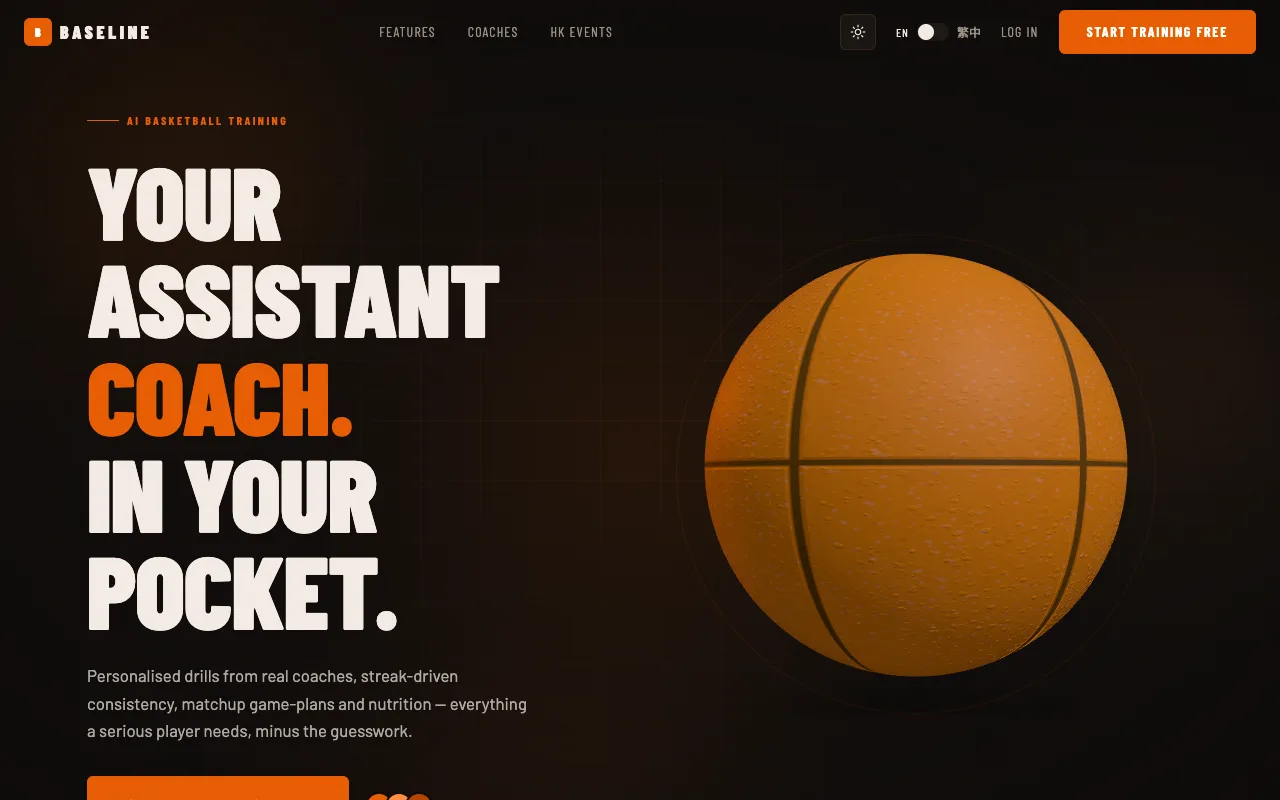
Baseline — Your Assistant Coach, In Your Pocket
by Diana Lam
An AI basketball training platform for Hong Kong players — personalised drills credited to real coaches, streak-driven session logging, matchup game-plans and a coach marketplace, with a full Supabase auth and onboarding flow behind it.
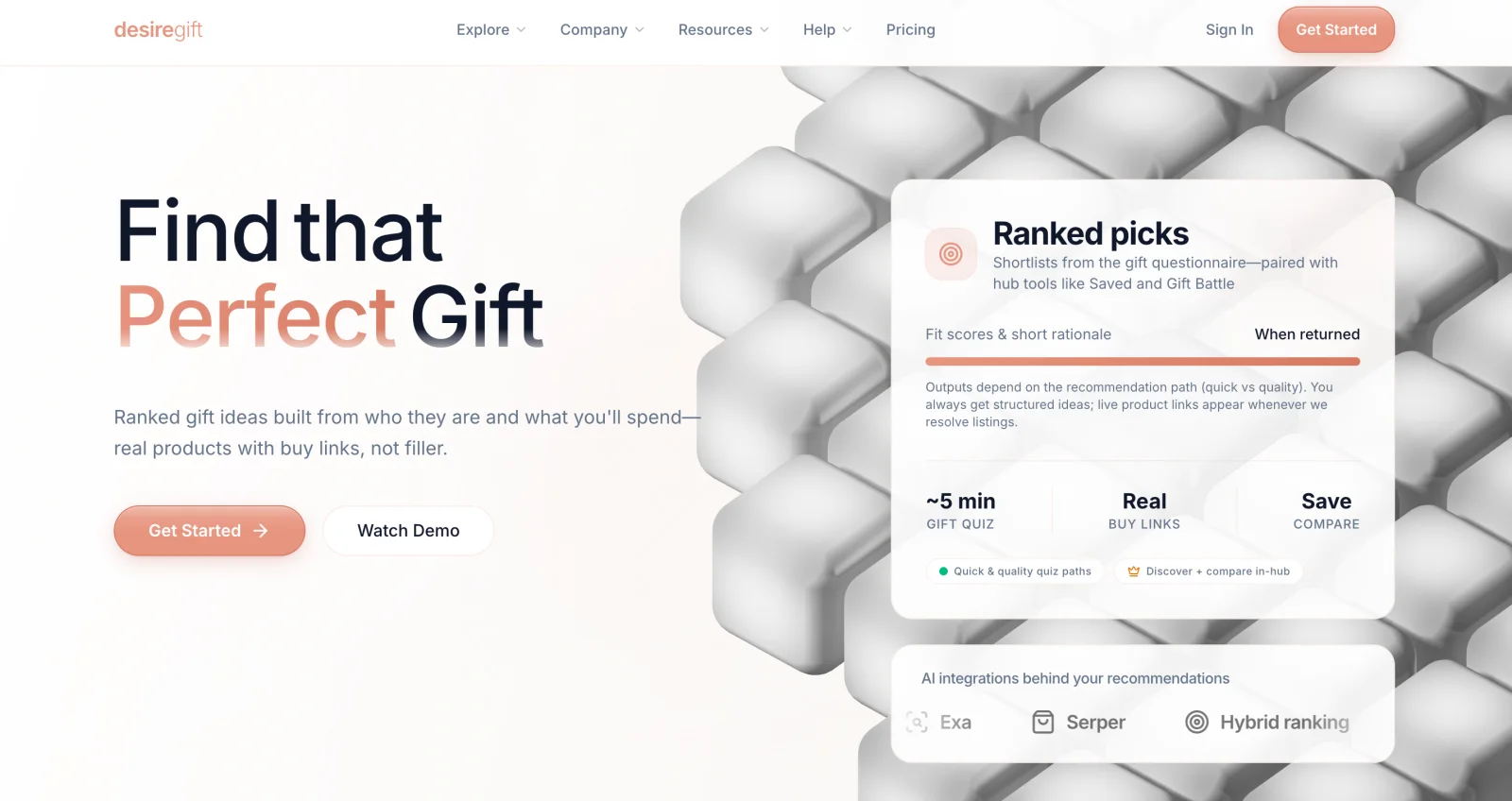
desiregift — AI-Powered Gift Intelligence
by Marcus Cheung
A commercial AI gifting platform on its own domain — a quiz that profiles your recipient, a hybrid ranking engine that returns scored picks with real buy links, and a ten-tool hub with Gift Battle, Gift Rater and analytics, monetised on three Stripe tiers.